|
|
|
|
|
|
|
|
|
|
|
Biblical
Sela. The rock city of Petra in Jordan
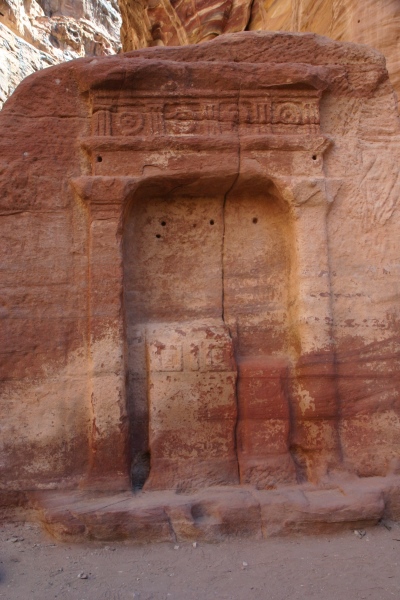
Tombs
on the way into Petra before entering the Siq. A number of relatively obscure references are made to place names throughout the Old Testament. While little known to us, they would have been well known to the original readers and hearers, in some cases for many generations following. One such place is called Sela in Isaiah.
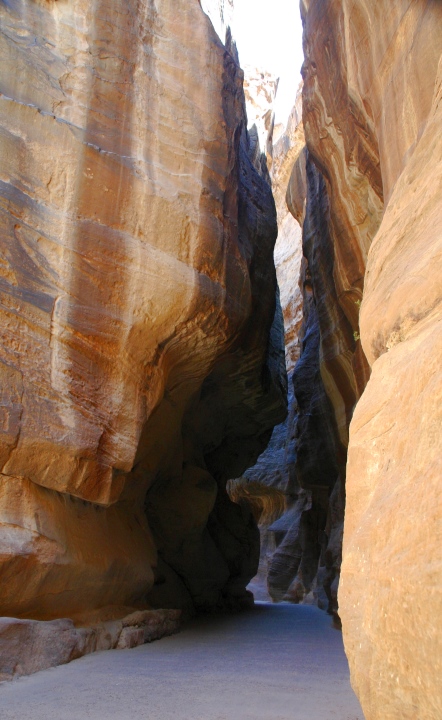
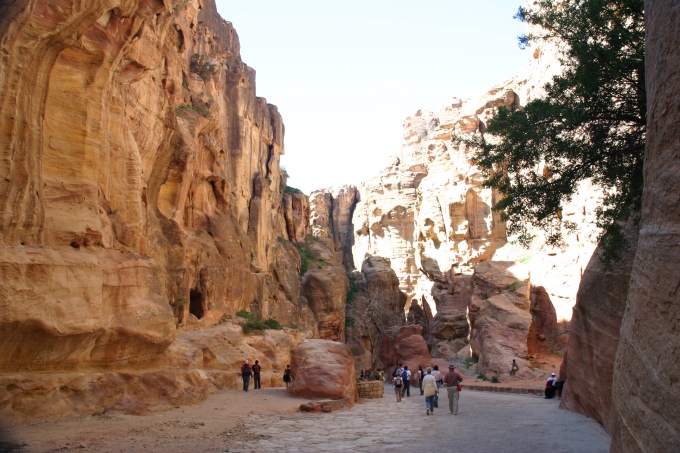
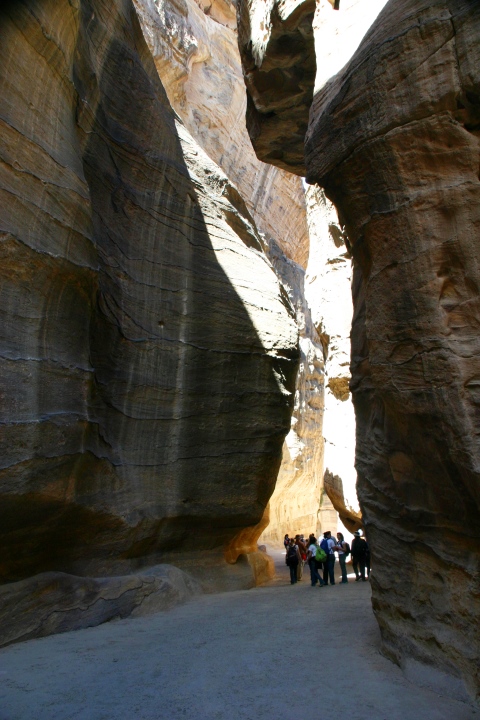
This desert place, Sela, is a location known today as Petra - located approximately 50 miles (80 km) due south of the eastern side of the Dead Sea. As a highly defensible location it was the capital of Edom, whose territory stretch northward to the Dead Sea. Located in a semi-landlocked valley, access to the site is generally through the eastern ridge via the Siq/Sik ("cleft"), a narrow, winding geologic fissure through the rock, five meters wide at its narrowest and towering up to 200 meters above.
The cliffs of the Siq
The widest part of the Siq (niches for gods carved in walls) While some have tried to say that the following passage could refer to a different Sela, claiming that a defeat in the Valley of Salt (Dead Sea) would have little to do with a capture fifty miles away, the reverse is true. If the major military force of Edomites were defeated at their northern boundary, it would have been virtually a straight (and logical) march to their capital city.
This passage in 2 Chronicles provided additional narrative of this same occurrence. Notice that the Edomites were also called "men of Seir." In stating that Amaziah also brought back the "gods of the people of Seir" it is highly likely that these were taken from Selah (Petra) where their prominent hand-crafted false gods would have been on display.
Moving back even further in history, the people who were to the west of Edom, the Amorites, used Sela as a boundary location.
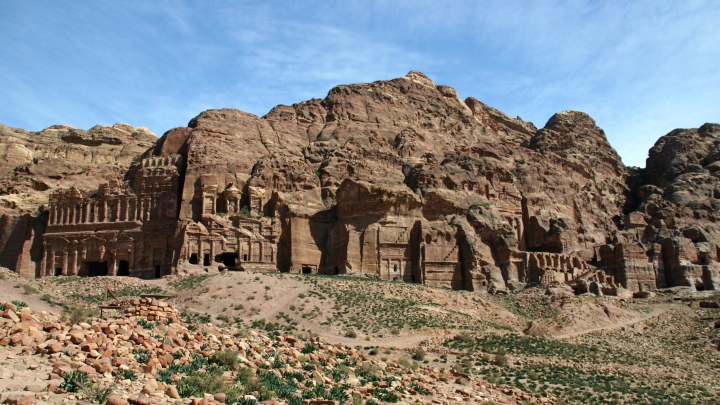
Some of the rock hewn tombs/buildings lining the valley of Petra God decreed judgment on Edom, those "who lived in the clefts of the rocks". This was a good description of how the people lived in Petra. Sela (Hebrew) and Petra (Greek) both mean Rock. The line just referenced (coming from the passage to follow) could equally be translated as "who lived in the clefts of Sela". It was a direct reference to a specific place at the heart of the Edomite kingdom.
It is believed that Amos is also referring to Petra (in Edom) using the name Bozrah, meaning "fortress."
A few centuries after Amos who wrote (circa 760-750 B.C.), around end of the sixth century B.C. (some say fifth), a nomadic tribe known as the Nabateans migrated from south western Arabia and settled in the area of Petra. It appears as though this Nabatean migration was gradual, provoking no hostilities between them and the native Edomites. As such they merged with the Edomite people. As the Nabateans abandoned their nomadic lifestyle and settled in Petra, they grew rich by levying taxes on travelers to ensure safe passage through their lands. The easily defensible valley city of Petra allowed the Nabateans to grow strong and maintain influence over the historical Edomite territory and beyond. Biblically, when the prophet Malachi (circa 420 B.C.) spoke of Edom (Malachi 1:4) he would have been referencing both native Edomites and the Nabateans who come to be a part of them.
|
|
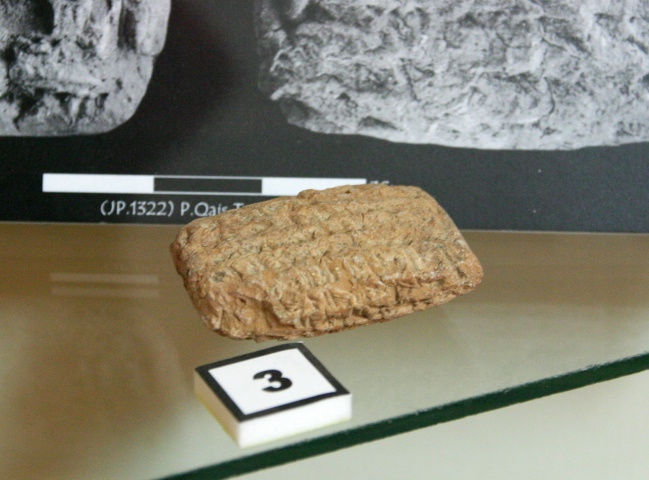
A
cuneiform tablet recording a contract between two Arameans and an
Edomite, Quas-Shama. |
|
Looking
up from the main valley of Petra.
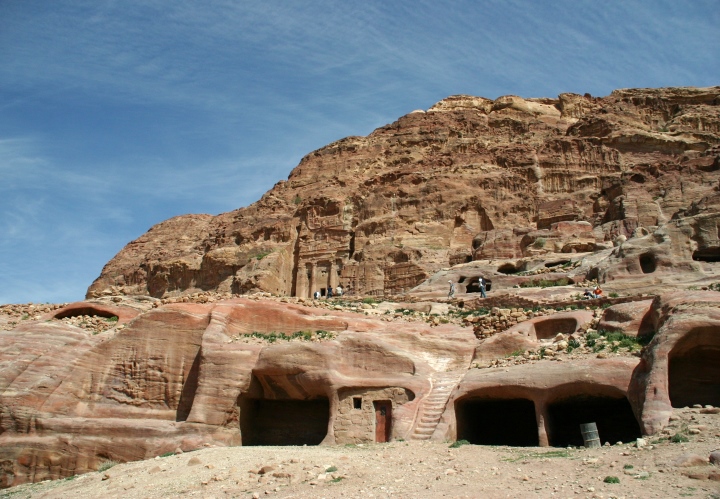
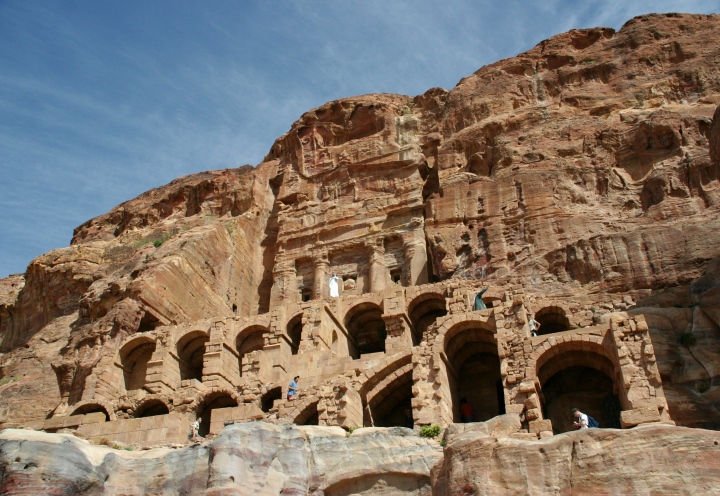
The Urn Tomb, with its open terrace built over a double layer of vaults.
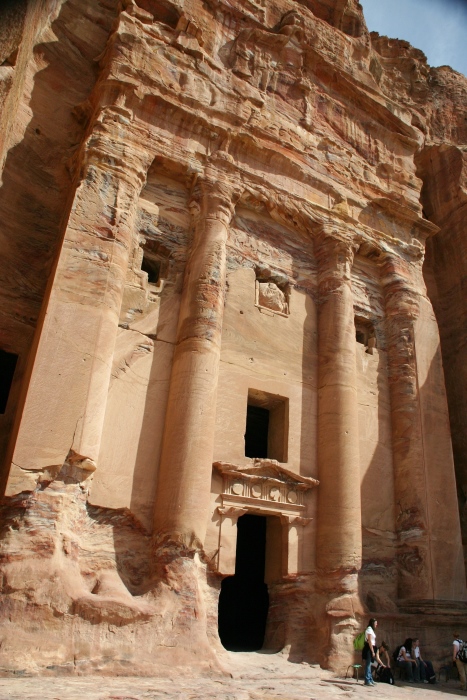
The Urn Tomb entrance.
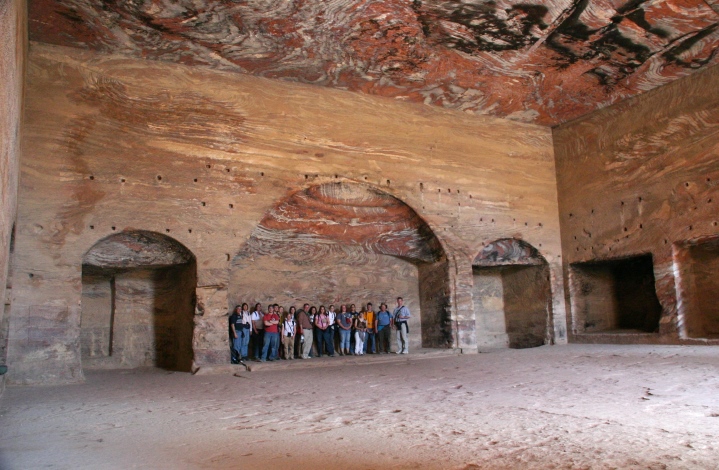
Inside the Urn Tomb. The room measures 20 by 18 meters, and the patterns in the rock are striking. The black on the ceiling is not the rock, it is from campfires inside through history. In the front of the room, where the people are standing, three apses were carved for later church purposes that were not part of the original royal tomb. The tomb was converted, according to a Greek inscription, during Byzantine times, by Bishop Jason in 447 A.D. The holes in the walls supported a wooden second floor during church uses. The acoustics are incredible for singing.
The
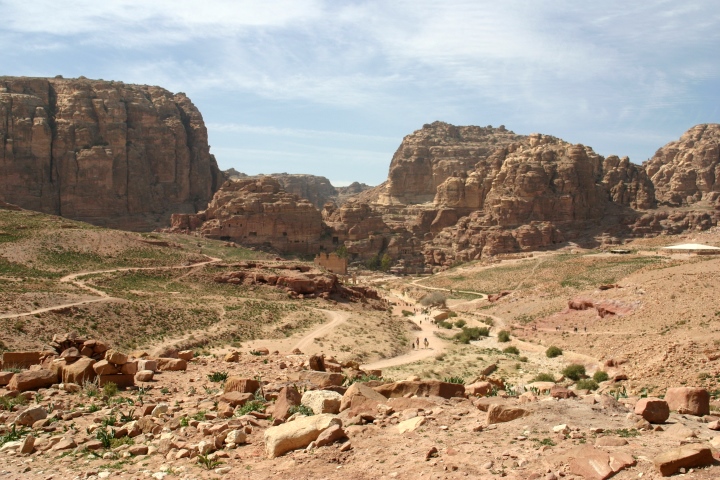
level area outside the front entrance of the Urn Tomb commands an
impressive view of the main valley, where most freestanding buildings
once stood. The valley is about three square kilometers.
|
|
Fans of the recently popular Left Behind series of books, amongst others, will also claim Petra to have future prophetical reference in Scriptures. The dubious premise of Petra being a refuge of the Jews during the final Tribulation was one that intrigued me as I prepared this article, mostly because there are absolutely NO direct references to Petra in end-times prophetic passages. This doesn't stop dispensational theologians and authors from reading the name Petra into hosts of passages. Some favorite passages include:
Their additional proof texts often include Revelation 6:15, Daniel 11:41, Isaiah 26:20-21, and Isaiah 2:2-3, 10, 19. For the record, this is how one website deals with this latter passage...
This last cited "exposition", of one supposed passage regarding Petra, shows the extent of most: speculation upon speculation while playing a word association game. The bottom line is that belief in Petra as being the fulfillment of these end-times prophetical conjectures is completely unfounded in Scriptures. This being said, I was curious as to where this notion came from, seeing as most modern authors on this subject come by their beliefs based on defending traditions versus authentic Biblical scholarship. The earliest origins I could find of this belief stem from the 1920's, a time in history when new dispensational end-times speculations were multiplying rapidly. One published book (booklet?) is entitled, The Man from Petra, by Joseph Hoffman Cohn of the American Board of Missions to the Jews. The circa world-war II booklet incorporates a number of easily refutable errors concerning Petra - Petra is not a mountain, it is a valley. Another pertains to the huge numbers of people he professes lived there historically (267,000) and the huge number he claims could live in comfort there now (100,000) using existing buildings. These numbers are wild exaggerations! Though Cohn's booklet came later, it was he that referred to an earlier adherent and proponent of this belief, named W.E. Blackstone (circa 1920s). An excerpt will help...
This is the problem that has allowed so much error to continue and be promoted in the church. Because the claim is fantastic and because someone prominent buys into it wholeheartedly, others feel no right to question what is taught. In fact, by the reformation principle of Sola Scriptura (Scriptures Alone), every believer must be willing to study and question all teachings (and teachers) on grounds of God's Word.
Even cults
such as the former Worldwide Church of God (Armstrongism) meshed
their false prophecies with this Petra theory. In 1956, Armstrong
published a booklet entitled 1975 In Prophecy, through which
he predicted the return of Jesus in that year (... also one of the
years the Jehovah's Witnesses falsely predicted the same). In the
Good News magazines of April 1962 and October 1963, Worldwide Church
members were shown pictures of Petra in Jordan, said to be their
"place of safety", the place where they would live during
the tribulation after God warned them to flee there. When you start
with fanciful speculations, the extension of such beliefs can take
you just about anywhere. |
|
Having exhausted the true and specific Biblical references to Petra (except one indirect reference regarding Paul which will be considered below), and having laid to rest a little prophetic speculation, the remainder of Petra's history comes from extra-biblical sources (including the apocrypha). It is still of interest to the Bible scholar because it pertains to the geographic, political and religious climate surrounding Bible history - Petra was and is a neighbor of Israel. Two legends are oft repeated about the area surrounding Petra. The first is included in the name of the area's principle water source Ain Mousa (Spring of Moses), and the place Wadi Mousa/Wadi Musa (Valley of Moses). This legend is a local Islamic legend without substance of Scriptures. The belief is that this "Spring of Moses" is the one created when Moses struck a rock with his staff.
This event, by Scriptures, was before the people had even attempted to enter Edomite territory (read the passage which follows, Numbers 20:14-21). This area around Petra was solidly in the midst of Edomite territory so the Arabic names are completely in error. The next legend falls for virtually the same reason. A second legend pertains to a nearby 4800ft (1460 meter) mountain which is called Jabal Haroun (Mount Aaron) or Jebel Nebi Harun (Mountain of Aaron). This one goes back to at least the first century historian Josephus, who testified that this mountain near Petra was Mount Hor where Aaron, the brother of Moses, was buried.
Josephus was in error regarding this mountain near Petra as being the Biblical Mt. Hor. This can be proven on grounds of Scriptures, as the Israelites had been denied passage into the Edomite territory.
In fact, this mountain near Petra was nowhere near the southern border of the Edomite territory (required, as per Numbers 20:23), so there was no way Aaron and Moses, let alone all the people, could have been there. In fact, this counterfeit Mt. Hor is far too rugged an area to have allowed the people to come and watch (i.e. Numbers 20:27). It is obvious that the actual location of Mt. Hor had fallen into obscurity by the time of Josephus leaving him to speculate or incorporating a recent, yet inaccurate, legend. Unfortunately this legend has been carried into the modern era and incorporated into the Arabic names. Josephus correctly references Petra as being the chief and capital city of all Arabia at the time of Moses and the people coming into the Promised Land. His description embellished the account found in Numbers 31:7-12.
Besides writing about Petra, in Josephus' earlier history speaking of the region, he cites the area as being called "Nabatene" by its inhabitants.
|
|
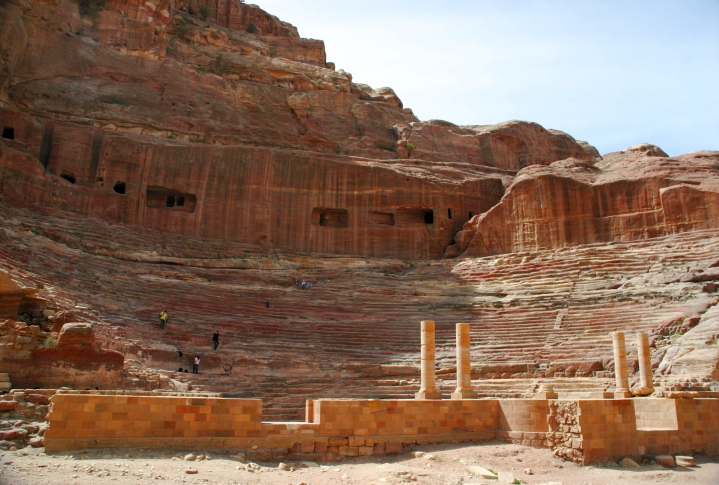
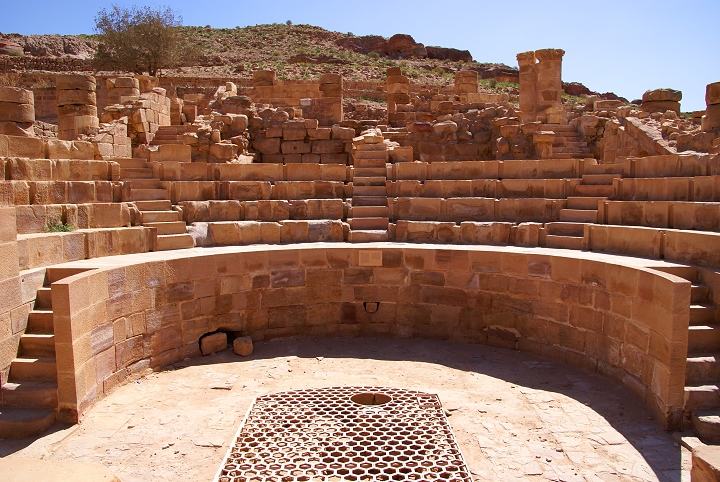
The 8000 seat amphitheater. Originally thought to have been built by the Romans after their defeat of the Nabateans in 106 A.D. it is now believed that the Nabateans cut the theater out of the rock around the time of Christ, cutting through many caves and tombs in the process. The Romans enlarged upon the original.
Looking down on the theater from up on the opposing cliff
|
|
During the inter-testament times, the Maccabean historical account references one Aretas as a ruler of the Arabs. This Aretas was one of the Nabatean rulers of Petra.
During these inter-testament times, the Nabateans controlled not only much of the area south of the Dead Sea but also the eastern shore. The Hamonean rulers of Israel legitimately viewed them as a possible invasion threat, perhaps with an attack coming across the Dead Sea.
While in
the Hasmonean period, we need to take note of the father of Herod the
Great, Antipater. This Herod the Great was the one who appears in the
account of the birth and early life of Jesus as being the one who
slaughtered the infants in Bethlehem (Matthew 2:1, 16). Antipater's
wife and Herod's mother, Kypros, was a Nabatean. |
|
Tradition is not necessarily a sure guide for history, but it has sometimes been found to be carrying elements of truth. One such ancient tradition concerns the Apostle Paul and his journey into Arabia...
Tradition holds that Paul went to Petra which was the capital of Arabia. This is probable, but not certain. One thing that is certain is that Petra was introduced very early to the gospel, quickly becoming a city with great Christian influence including the seat of a Christian bishop in subsequent centuries. Even if Paul did not go specifically to Petra, he was certainly aware of the ruler at Petra, king Aretas. Damascus was actually at the northernmost part of the territory ruled by Aretas, so to say that Paul left Damascus and went "into Arabia" was to say that he headed south, still on the eastern side of the Jordan River and Dead Sea, further into the territory of Aretas. Note that this is not the same Aretas referenced in the Maccabean account; rather it was a successor by the same name, Aretas IV.
Ruins
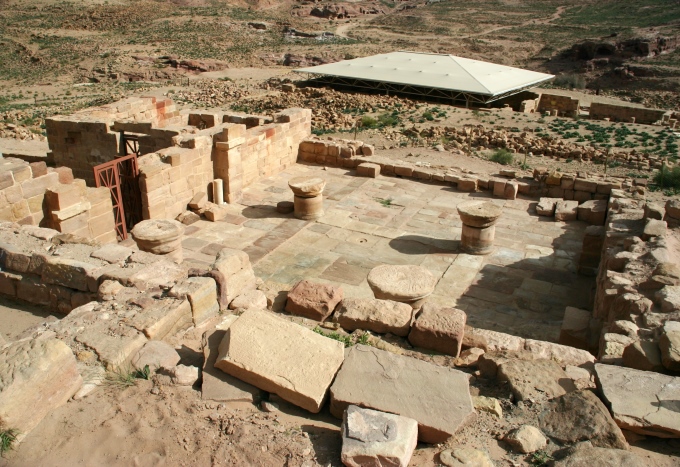
of two Byzantine churches at Petra, one early (foreground),
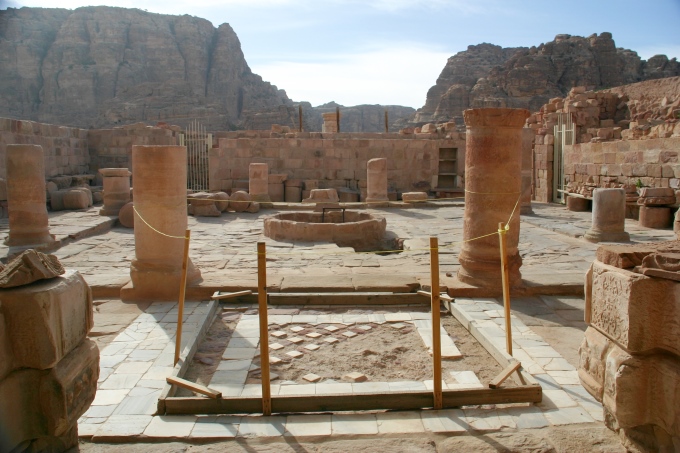
Ruins of 4th century church. Center round opening is for a water cistern
Ornate
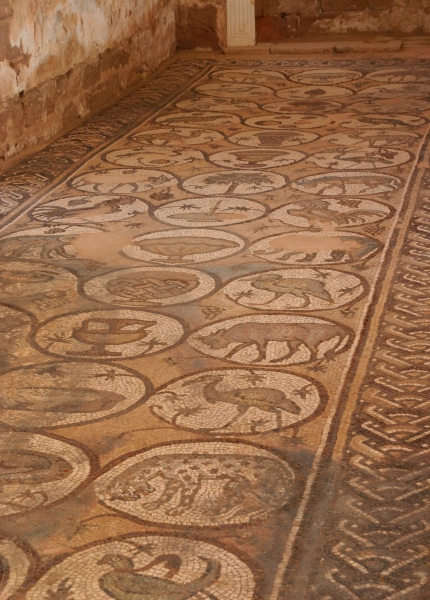
tile floor of 5th or 6th century church with animal and other scenes.
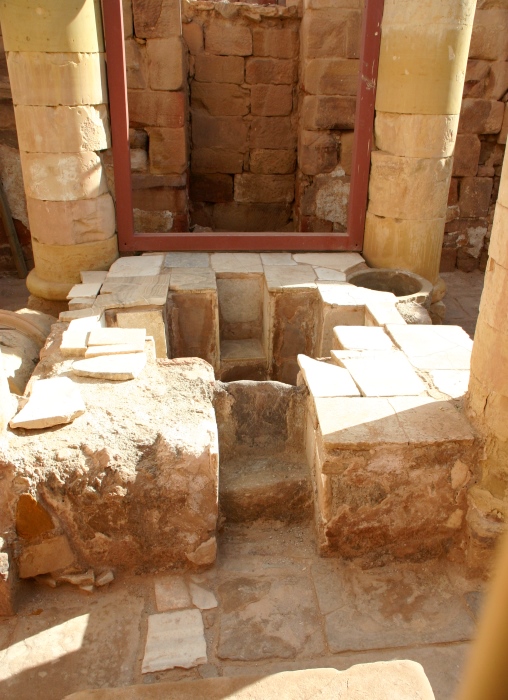
Baptismal Font at 4th century church.
|
|
We know for sure that king Aretas IV (or at least his governing officials) were impacted by Paul's teaching and protests from Jewish subjects, stemming from that initial time in Arabia and Paul's return to Damascus (Acts 9:22-25). Paul directly cited this in a summary of events concerning his ministry.
Again, it is not improbable that King Aretas already was aware of this man Paul (formerly Saul) who had spent time in his kingdom and perhaps in the capital city. The Nabatean kingdom was one filled with idols, especially the capital city of Petra. Paul's message that these are not truly gods (Galatians 4:8) and that there is only one true God would have been an affront to the entire kingdom. This would have certainly encouraged the leadership to want to have him arrested, when prodded by the Jews. If you are thinking, "don't the Jews also believe that there is only one true God?", so why wouldn't they be a threat as well? There is a difference. The message of Christianity (and Paul) is that all people are commanded to repent and turn to God through Jesus Christ (Acts 17:30). The Jews, much as they still practice today, did not seek after proselytes or converts. If someone wished to convert that's fine, but for the most part they left the Gentiles to their ways (so long as they didn't try to impose pagan beliefs and practices on them). While mentioning the false gods of Petra, it must be noted typical to the pagan lands surrounding Israel they utilized "high places" or outdoor religious sanctuaries. Petra's primary high place has been discovered, a fair climb/hike up onto the ridge surrounding Petra. Nabateans honored gods of stone as well as local and Roman deities and even the sun and moon.
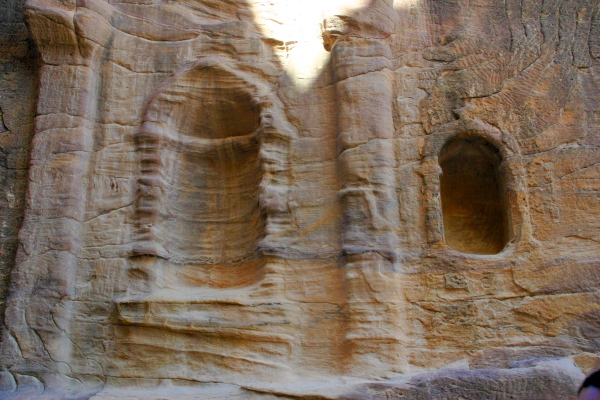
Niches
in wall of Siq for gods. Some have stairs leading up to them.
"god" carved right in the niche
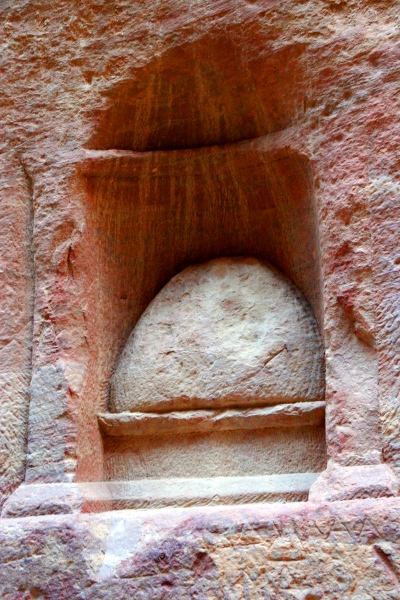
Another god... see closeup below
Notice this idol has no mouth or ears. A god that cannot hear and cannot speak.
|
|
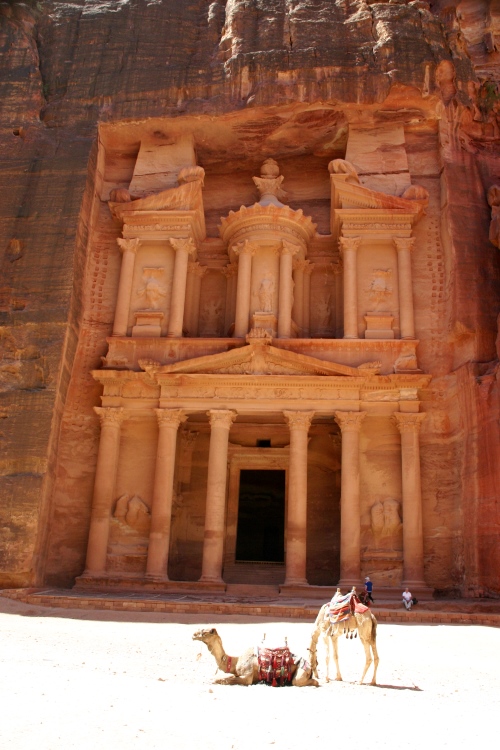
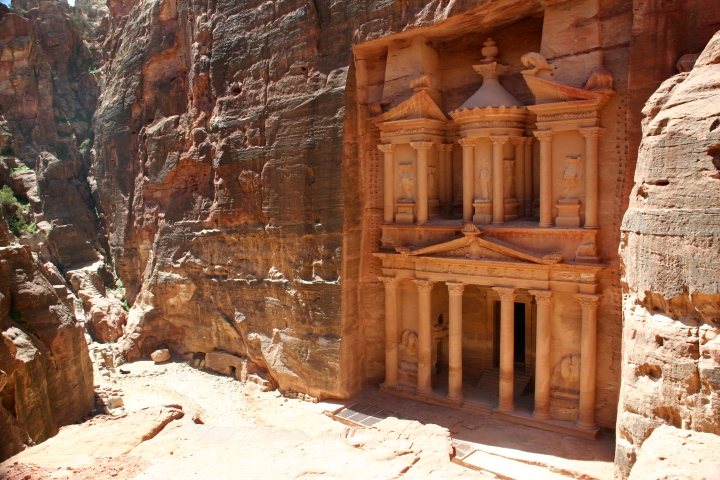
One of the most impressive and recognized monumental tombs in Petra is called "Al-Khaznah" or "The Treasury." While scholars debate the exact dating of this Nabatean edifice, some believe that it may have been the tomb of king Aretas IV (8 B.C. - 40 A.D.).
After
winding 1.5 kilometers, the Siq suddenly opens to view one of the
most impressive of all Petra's monuments "al-Khazneh" --
Arabic for "the Treasury". It is carved out of solid rock
from the side of a mountain and stands over 40 meters high.
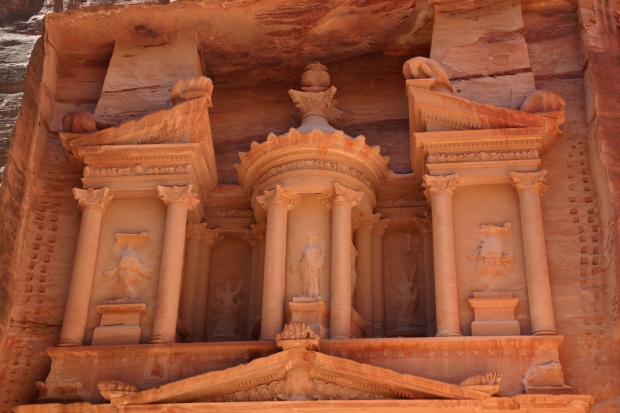
Although it really was a royal tomb, the Treasury gets its name from the legend that ancient treasure was hidden there -- in the giant stone urn which stands in the center of the top level. Believing the urn to be filled with ancient pharoanic treasures, the Bedouins periodically fired guns at it: proof of this can be seen in the bullet holes which are clearly visible on the urn. The barely distinguishable reliefs which can be seen on the exterior of the Khazneh are belived to represent various gods.
This a view of the Treasury, looking down from high on the cliff face opposite
Author, Brent MacDonald, high on the cliff face opposite the Treasury, taking the photo appearing two above. This photo was by his son, Scott, at maximum zoom on his digital camera.
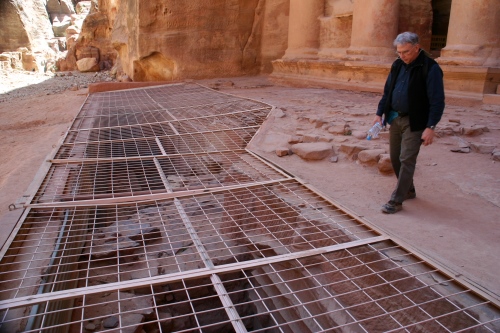
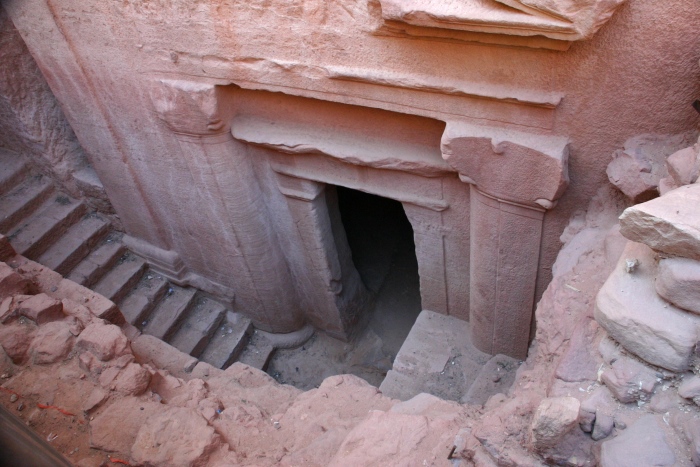
It was believed that the Treasury was two (large) stories high until excavations showed that there was a floor below current ground height. The valley has filled in with debris washed there over the years. The metal mesh, above, covers the excavation of the ground floor.
Entrance into the ground floor (currently below ground height) of the Treasury
|
|
The Nabatean kingdom, which had been declining for at least a century, was still a threat to the Romans who wished to have absolute control over the entire region (especially following their final victory over neighboring Israel A.D. 66-70). While the Romans had treated the Nabatean kingdom as a client or subject kingdom since the time of Herod, it was a rocky relationship at best. The last Nabatean monarch, Rabbel II, struck a deal with the Romans that as long as they did not attack during his lifetime, they would be allowed to peaceably take over upon his death. With Rabbel's death in 106 A.D., the Romans (under emperor Trajan) subsequently claimed the Nabatean kingdom and set about transforming it into a Roman city, complete with the usual plan of a colonnaded street, baths, and other common trappings of Roman life. This Romanization did nothing to stem Petra's decline. Roman rule of the province of Arabia ultimately shifted elsewhere and even Petra's commercial importance was superseded by other cities.
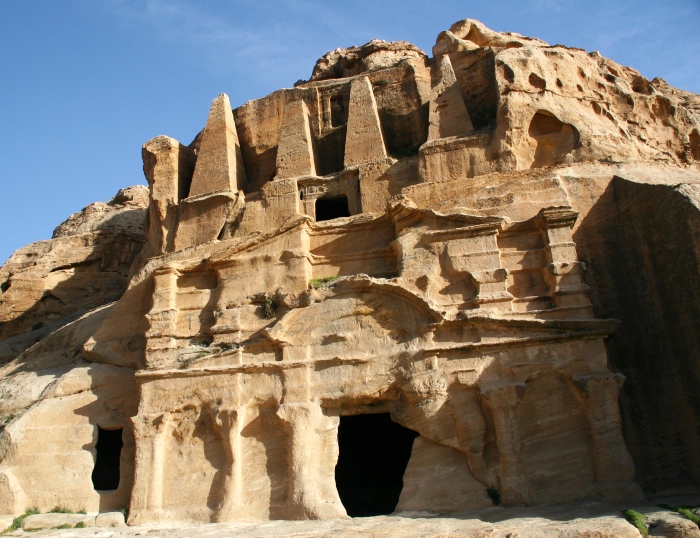
The
Obelisk Tomb, which once stood seven meters high. Five graves were
found inside the tomb, four represented by pyramid-shaped pillars and
the last by a statue between the middle pillars. The Byzantine era saw some Christian occupation of Petra, evidenced by inscriptions and architectural remains. This Christian influence remained, especially in the form of monasticism, until as late as the Crusades. An earthquake in 363 A.D. destroyed all freestanding structures and finalizes a major abandonment of the city. By the time of the Muslim conquests in the seventh century, there was little left. Another major earthquake in 747 A.D. again damaged the freestanding buildings that had been built since the last. During the early period of the Crusades Petra regained some strategic value and was refortified. Yet with the defeat of the Crusader forces at the Horns of Hattin in 1187 A.D., Islamic control came to the whole area and all official use of Petra ceased.
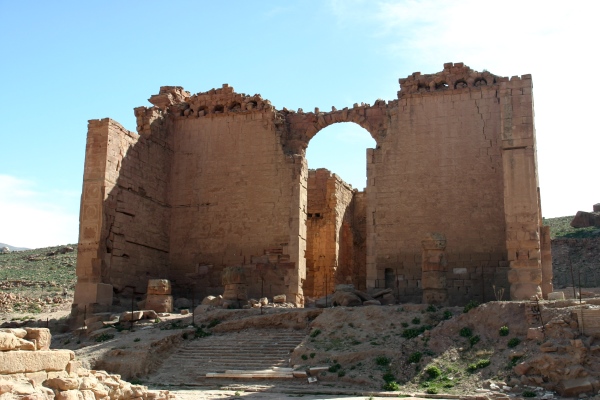
Ruins
of a large building in the valley of Petra, one of the freestanding
buildings destroyed by earthquakes. For approximately seven centuries, the existence of Petra became not much more than a legend, a protected secret known only to the local Bedouins and Arabs. In 1812, a young Swiss explorer and professed convert to Islam named Johann Ludwig Burckhardt heard locals speaking of a "lost city" hidden in the mountains of Wadi Mousa. In order to find the site without arousing local suspicions, Burckhardt changed his name and disguised himself as a pilgrim seeking to make a sacrifice at the tomb of Aaron - a mission which would provide him a glimpse of the legendary city. He was successful and through his efforts Petra was revealed to the modern Western world. Victorian traveler and poet Dean Burgon wrote a description of Petra, not many years after Petra was rediscovered, in 1845. Commentaries and articles often quote the last one or two lines, but those preceding are also worth reading.
|
|
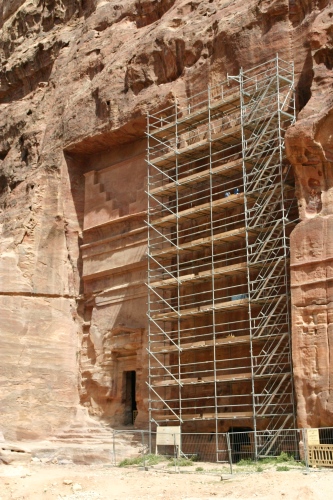
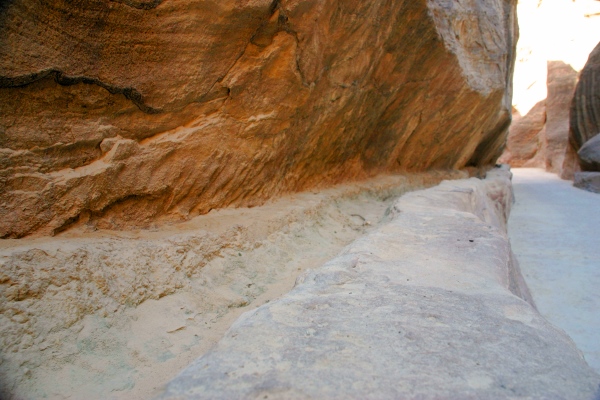
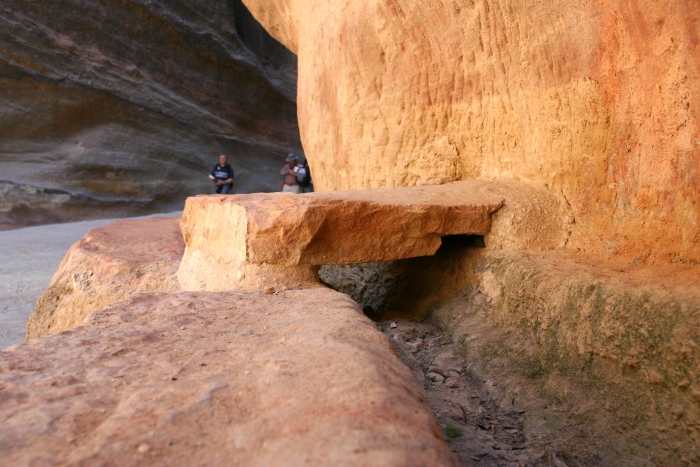
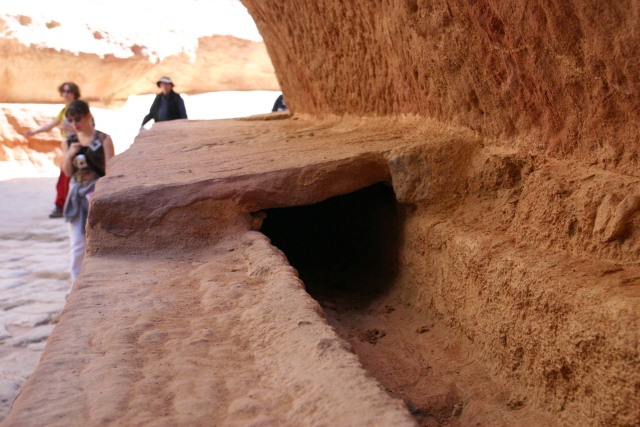
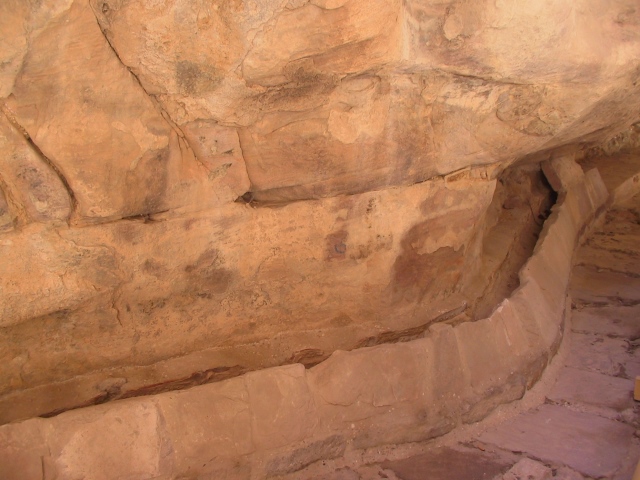
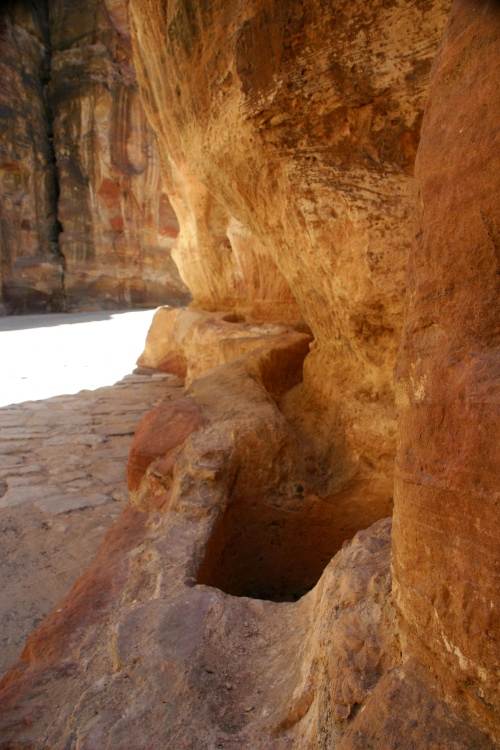
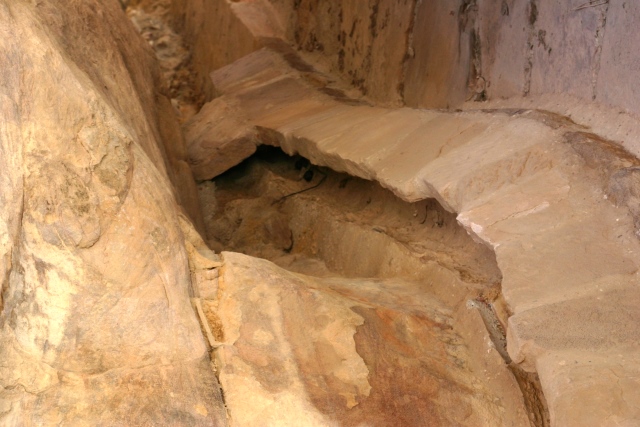
Restoration/preservation work at Petra Excavations continue at Petra, including restoration work. The ancient engineering at Petra is a marvel, as they had a system of dams and water works to divert and store flood waters from the Siq. This system included many cisterns, pressure control basins, and a vast system of pipes.
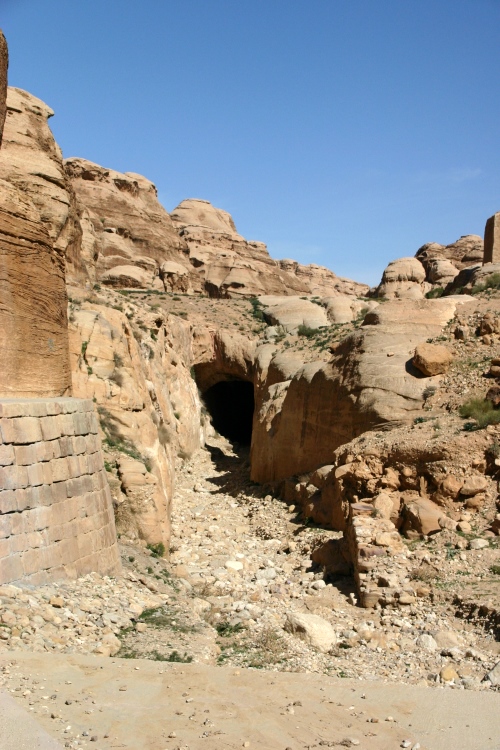
A
primary (large) water diversion tunnel from the Siq
Perspective
of the Siq with water channel to left.
One of the water 'pipes' lining the Siq. This would have been covered.
A fragment of the cover that would have allowed water to flow down hill under pressure.
Another seqment with cover remaining
A
built up and now partially covered section of the water pipe.
This
was a well in the water pipe that would have served to
Another segment with some of the terracotta cover remaining.
|
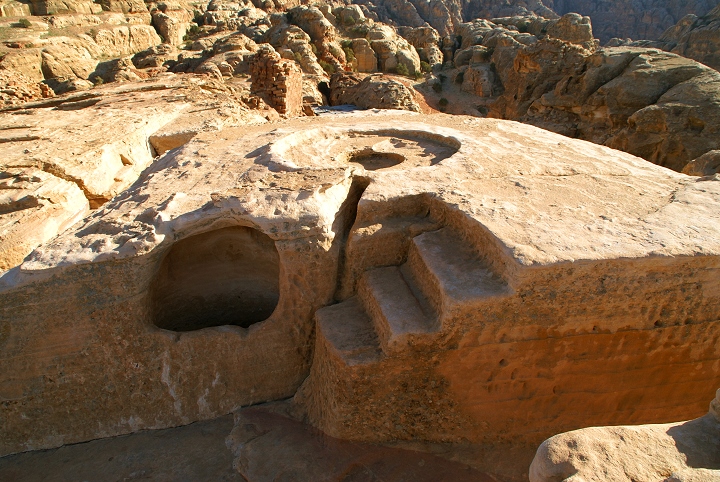
Altar
at the high place of Petra.
This
Nabatean place of sacrifice was used mostly for animals
but
there is some evidence that there may have been human sacrifices as well.
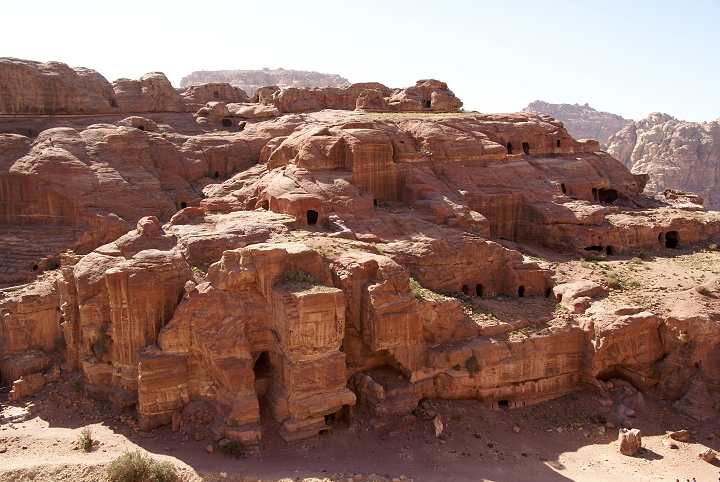
A bird's eye view of one hillside full of tomb/room entrances.
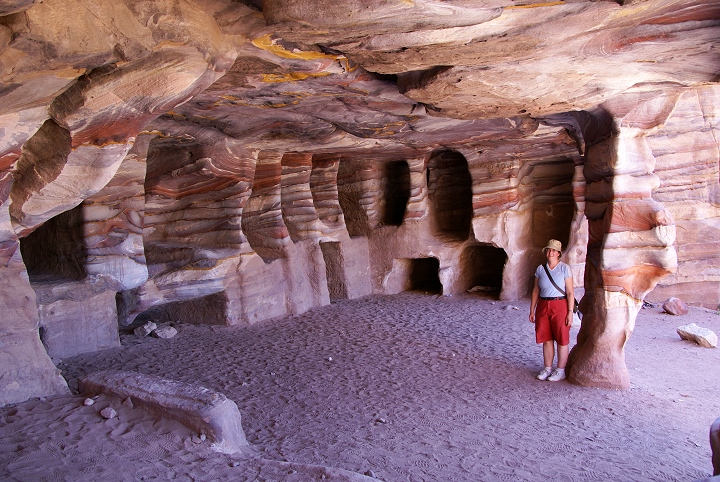
Inside one tomb, high on the hillside. Now very weather-worn.
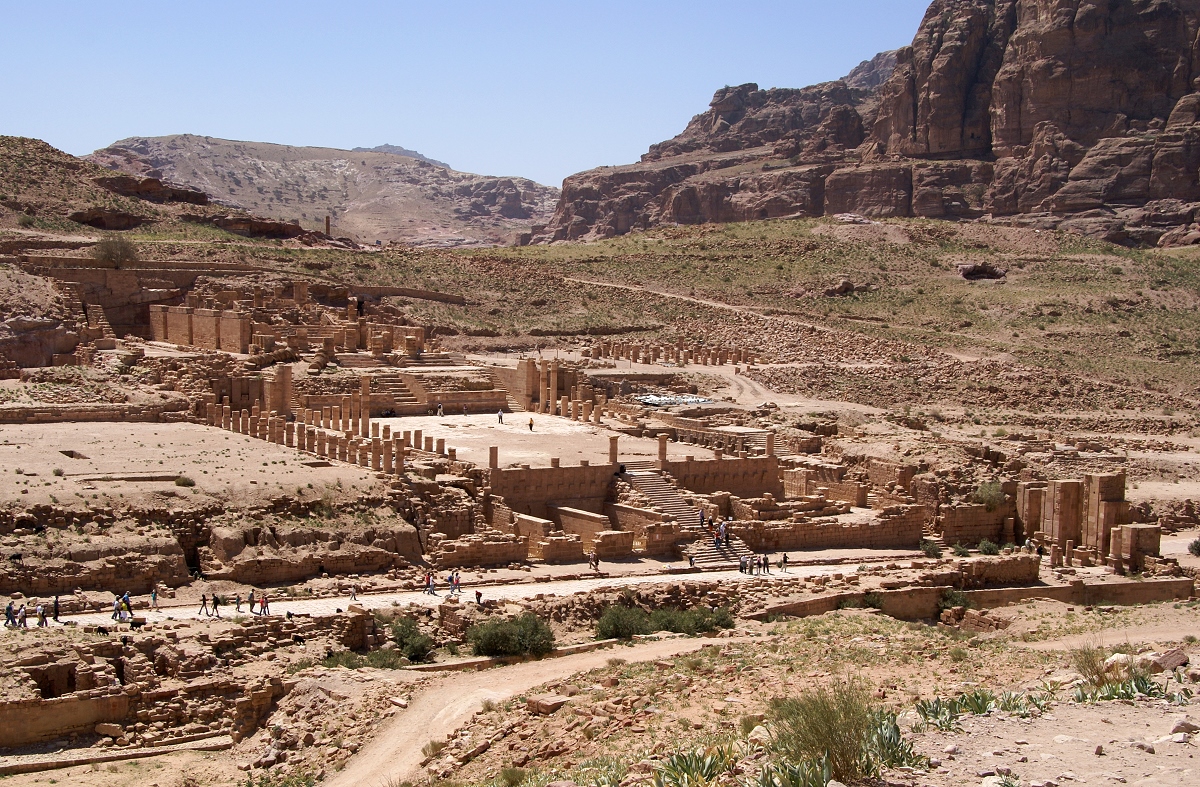
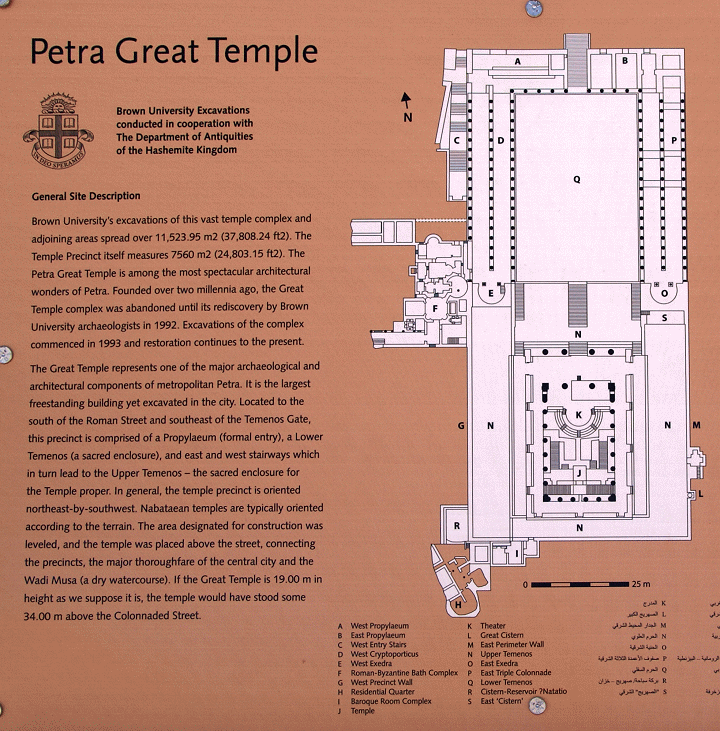
Recent
excavation (2008) of the Great Temple by Brown University.
Click
on photo for larger view (use browser back button to return)
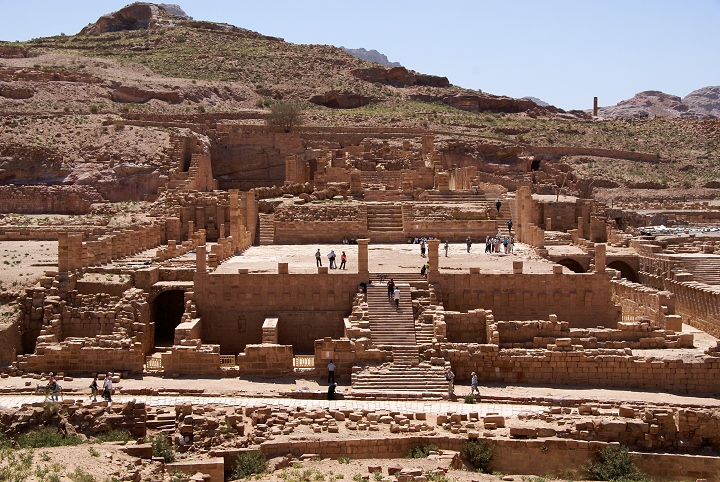
Face-on view of Great Temple
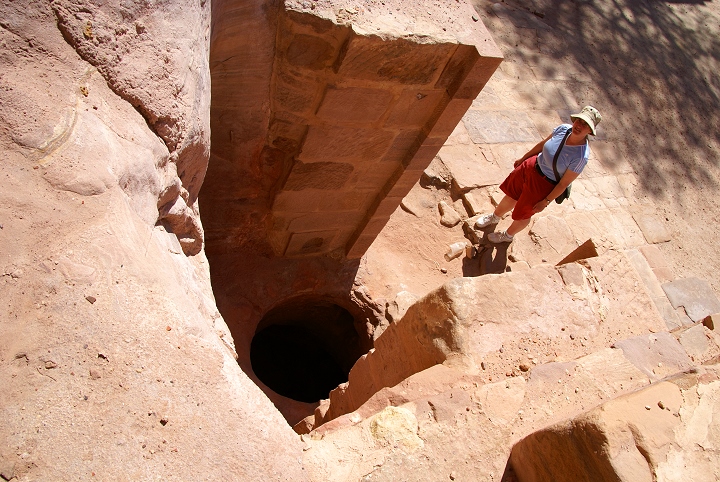
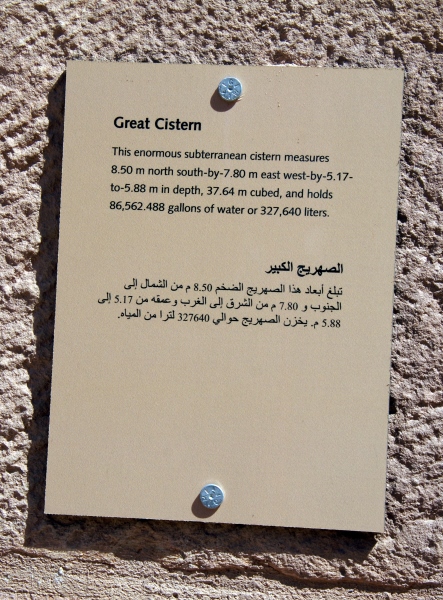
Angie by the entrance hole to the great cistern at the Great Temple, above; see details below.
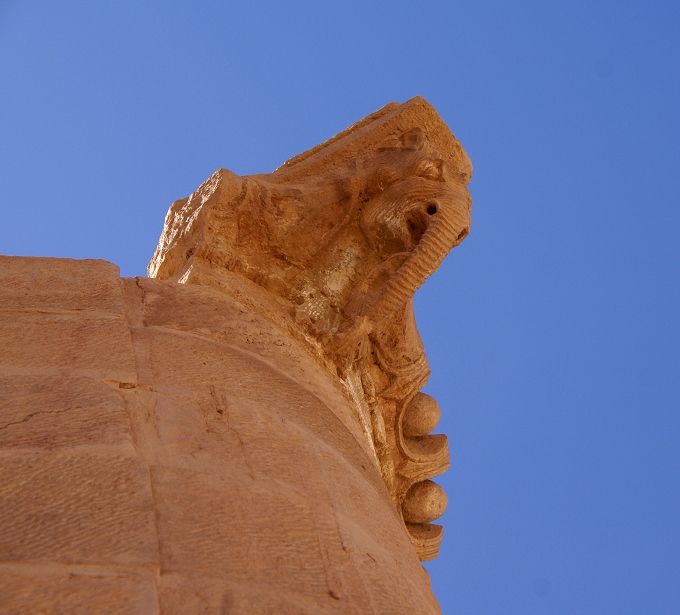
Elephant shaped captial at the Great Temple
Small theater at the Great Temple
After
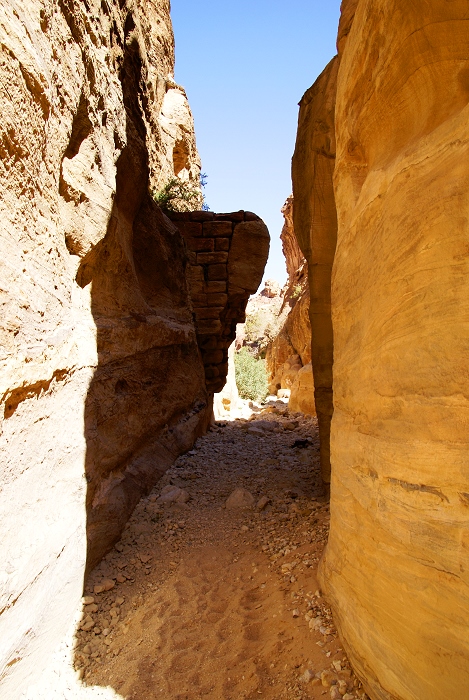
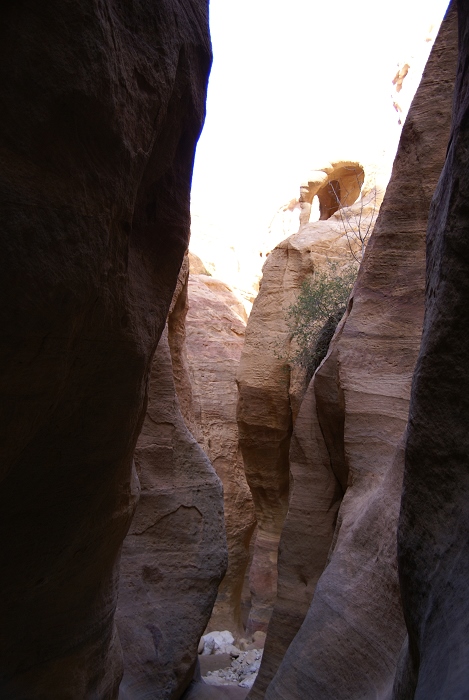
passing through the water diversion tunnel it narrows into a natural ravine
The
Nabateans use dams and water channels to control the water flow to
the city
Remains
of one dam appear above
In
the narrow valley from the water tunnel there are incredible views
Note
the elephant shaped rock -- all natural
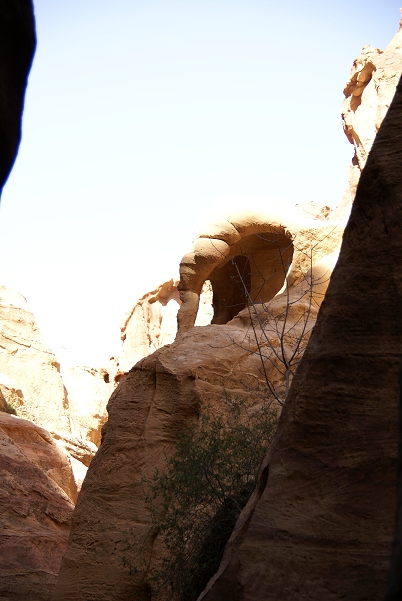
In
the narrow valley from the water tunnel there are incredible views
Closer
view of the elephant shaped rock -- all natural
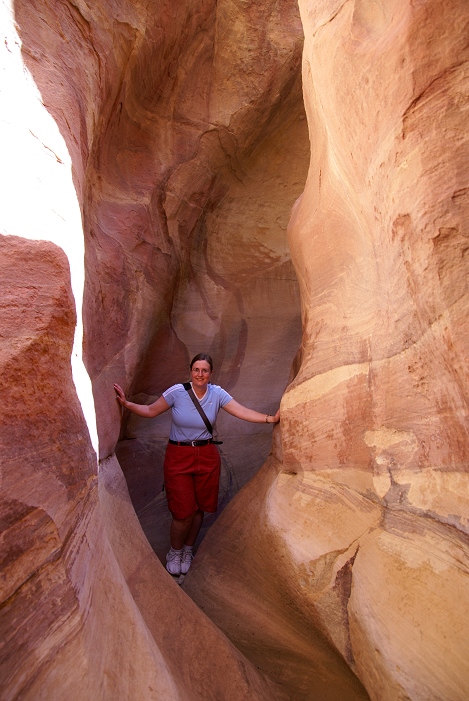
In
the narrow valley from the water tunnel there are incredible views
Angie
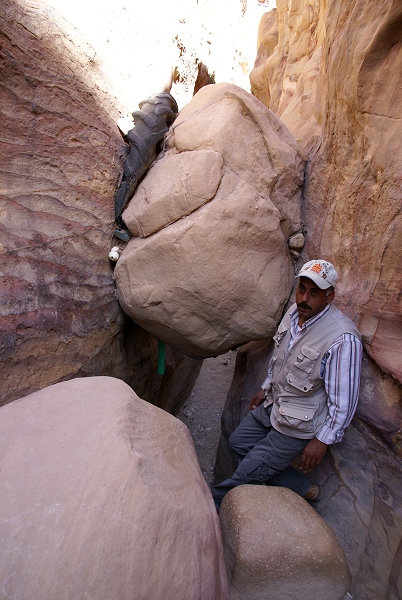
in the water formed narrow canyon
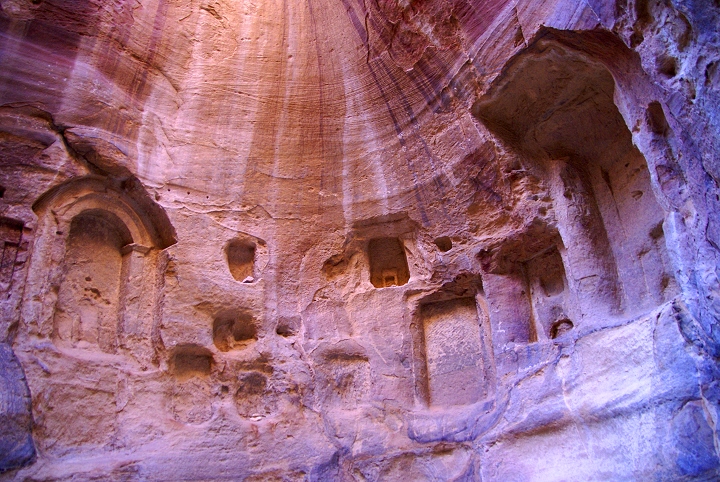
Nabatean niches carved along the water tunnel canyon for their gods.
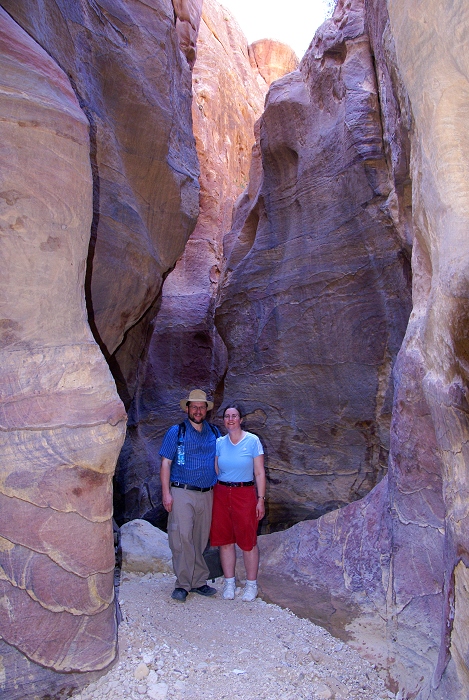
Author Brent MacDonald and wife Angie in the water-formed narrow canyon
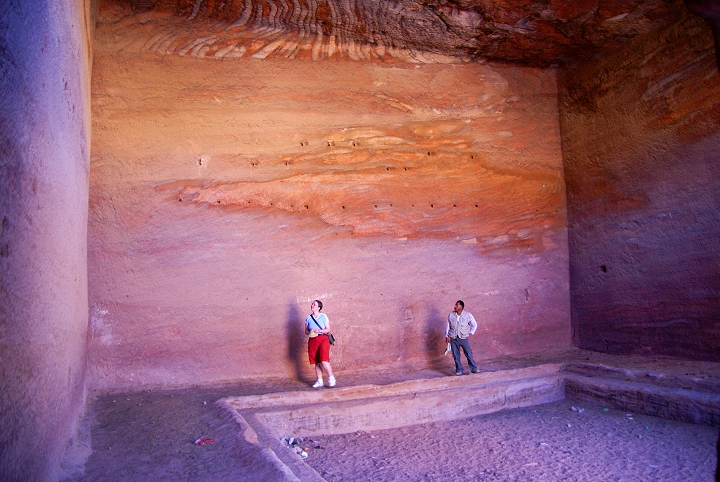
In
the valley going from the water tunnel canyon down towards the
center of Petra, where most visitor never go,
there
are numerous homes and tombs. This was one large rock-cut house
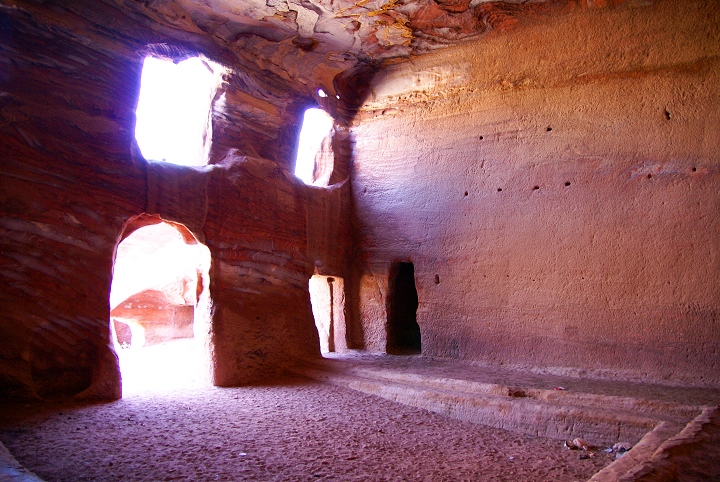
A view of the rock cut house in the photo above this, except looking towards the door.
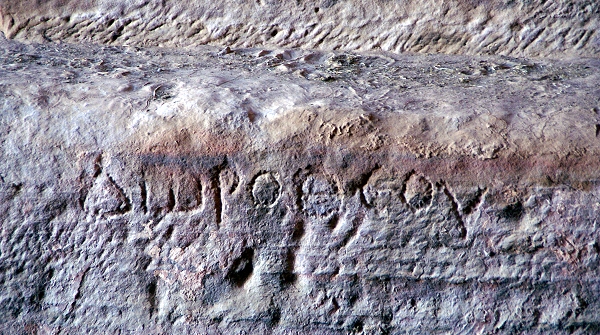
An inscription identifying the home owner from the house in the two photos prior.
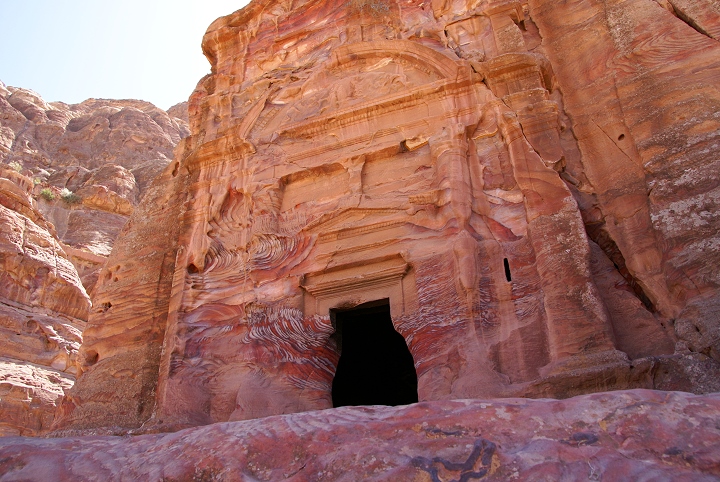
Still
in the same valley, as the photos immediately prior. This is the
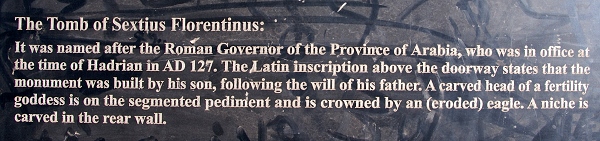
tomb of Sextius Florentinus
See
below for description and more photos
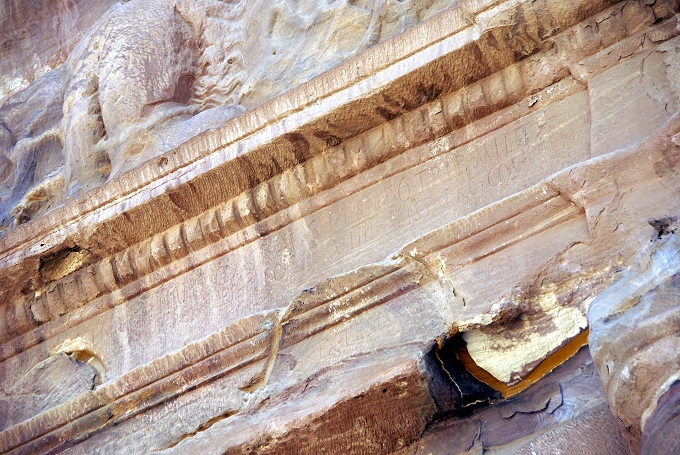
Look carefully to see part of the Latin Inscription at Sextius Florentinus' tomb
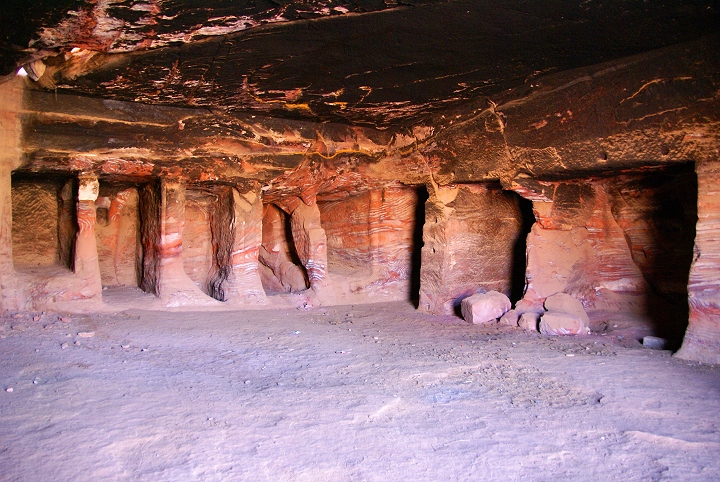
Ossuary
niches in the rear walls of the Sextius Florentinus tomb.
The
black on the ceiling is from campfire through the centuries.